Fair use is a rule in US copyright law that lets people use limited parts of a copyrighted work without the owner's permission, for purposes like commentary, criticism, news reporting, teaching, research and parody. There's no fixed list of what counts. If it's disputed, a court decides by weighing four factors, so fair use is a judgment call, not a yes-or-no rule.
Fair use is also the most common reason a takedown gets pushed back, so it's worth checking before you file. If someone has simply copied your photos, videos or writing, that's usually not fair use, and our team can handle the takedown for you from $199 per site. Not sure? Send us the links and a real person will tell you honestly whether a takedown is likely to succeed. You pay nothing until you're ready to go ahead.
Read the full guide: Is it fair use? How to tell before you file a takedown. It covers the four factors in plain English, common examples and myths, and how to decide whether to file.
Reviewed by the DMCA.com Takedown Team · Last reviewed November 2026
The four fair use factors
US law (17 U.S.C. 107) lists four things a court weighs. No single factor decides it.
- The purpose and character of the use. Does it add something new, like commentary or criticism, or just repost your work? Commercial use doesn't rule out fair use, but it counts against it.
- The nature of the copyrighted work. Creative work like photos, art, music and fiction gets more protection than factual work.
- How much was used. A short quote or clip to make a point leans toward fair use. Your whole photo, video or article leans against it.
- The effect on your market. If their copy replaces yours, or makes your work worth less to license, that weighs heavily against fair use.
Is it fair use or a straight copy?
How your work is being used usually makes the answer clear.
- Often fair use: a review that shows short clips while critiquing them, a news story that quotes a few lines, or a parody that comments on the original.
- Usually not fair use: your full photo or video reposted on someone else's site or account, your articles copied onto another blog, or your product photos used to sell someone else's products.
Giving credit, adding a "no copyright intended" note or not making money from it doesn't turn a copy into fair use. For more examples and myths, see the full fair use guide.
If my stolen content is not fair use, what do I need to get started?
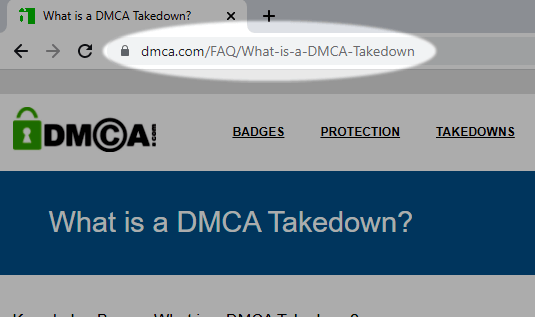
The infringing link
The exact page, post or file where your stolen content appears now. Copy the full link from your browser address bar.

Your original
Where your content was when it was taken, like your website, profile or cloud storage. If it was never online, say where it came from, like your phone or camera.

A short description
How the content is yours and how it was taken. For example: "I took this photo of myself and it was posted on this website without my permission."

DMCA.com Fast Tip
Before you file, save screenshots of how your work is being used, with the link and the date. If the site later claims fair use, a clear record of a straight copy makes your case easier to explain.
Who can file a takedown if it isn't fair use?
- Content creators and owners
- Copyright owners
- Code writers and publishers
- Social media users
- Publishers or distributors, with the owner's permission
- NFT owners
- People shown in content published without their permission (special considerations may apply)
Not sure how to answer any of these? Ask us about your situation.
Who decides whether it's fair use?
Only a court can decide for certain. Websites, platforms and hosts don't rule on fair use. When they get a valid takedown notice, they usually remove the content, because that keeps their legal protection under the DMCA's safe harbor rules.
That's why, in the US, you're expected to consider fair use honestly before you send a takedown notice. You don't need to be certain. You need to have looked at how your work is used and believe it isn't allowed. A takedown notice is a sworn statement.
What happens if the infringing site claims it is fair use?
They can send a counter notice: a sworn reply asking the site to put the content back. It can only be sent after the content comes down, so a fair use claim can't stop or delay your takedown.
Once the site gets a valid counter notice, it can restore the content after 10 to 14 business days, unless you file a lawsuit and tell the site before then. Keeping the content down at that point is a step for a copyright lawyer. DMCA.com is a takedown service, not a law firm, and we don't give legal advice. For the full timeline, see What is a DMCA counter notice.
Your content was removed, and you believe it's fair use? Our Platinum Takedown ($599 per site) includes filing a counter notice for you. Start your counter notice.
Fair use outside the US
Fair use is a US rule. The UK, Canada and Australia use a narrower rule called fair dealing, which only covers specific purposes like criticism, review, news reporting and research. If the site or uploader is outside the US, local rules can change the answer. Read more in the guide.

DMCA.com Testimonial
"DMCA.com is AMAZING! We had our original content stolen and posted to another website without our authorization. This person had posed that my wife was one of his 'models' and used our pictures and videos in her fake profile. We spent nearly a month emailing the websites 'admin' and flagging each video and photo daily for copyright infringement, but had no luck. We never even got a single response. After discovering DMCA.com, we immediately opened a case and in less than a week, every trace of my wife on this site was gone! If you ever have a need to get something sensitive removed from a website, or simply don't want your content on someone other person's website, let DMCA.com help. They are truly professionals and my wife and I are forever grateful!"J&L, St. Paul, Minnesota
File it yourself or let us do it
Do it yourself
$10 per month
The DIY Takedown Toolkit gives you templates and host lookup tools, and you send and track the notices.
See the DIY Toolkit
Related DMCA takedown FAQs